
RSPCA Sold a Pup? [2016]
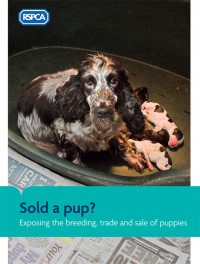 New report – summary to follow.
The full report may be viewed here: [PDF]
Kennel Club Dog Health Group Annual Report [2015]
The Dog Health Group develops strategy on the health and welfare aspects of the KC’s work. It highlights the Pedigree Breed Health Survey and promises breed specific reports in March 2016. It declares its commitment to tackling CMSM and calls for the use by breeders of the BVA/KC CMSM health scheme in order to collect ‘robust data.’ The KC is a member of the International Partnership for Dogs (IPFD) to collaborate with other kennels clubs on health matters. The DHG sub-groups include: assured breeder scheme; breed standards and conformation; genetics and health screening.
The full report may be viewed here: [PDF]
PDSA PAW Report on Animal Wellbeing in the UK [2015]
 This report is an analysis of how well the UK pet owning public are meeting the five welfare needs of their pets (diet, environment, social needs, behavioural needs, protection from disease, injury, pain, suffering. It found that awareness of the Animal Welfare Acts is low and that many owners may not be providing everything their pets need. The PDSA hopes to work with the wider veterinary profession to continue to raise awareness and help to facilitate behavioural and cultural changes in pet ownership
The full report may be viewed here: [PDF]
Licensed Dog Breeding in Great Britain Report [2015]
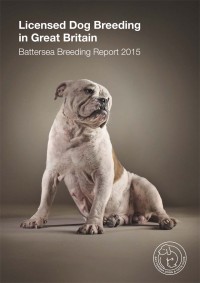
This report, published in October 2015, examines the scale of licensed dog breeding operations in the UK. It finds that 88% of puppies are produced by unlicensed breeders and recommends lowering the licensing threshold to two litters. It finds a huge variety in licence fees across the UK and concludes that dog licensing is in need of a complete overhaul.
The full report may be viewed here: [PDF]
EU Dog and Cat Alliance
The welfare of dogs and cats involved in commercial practices: a review of the legislation across EU countries
 This report describes the legislation in place across the EU for the protection of dogs and cats. It confirms the wide variation across countries and highlights substantial gaps in the national legislation in protecting dogs and cats used in breeding and selling. The report recommends compulsory permanent identification on a appropriate database linked to an EU database; compulsory licensing of cat and dog breeders and harmonised EU standards for breeders; a ban on third party sales of dogs and cats; appropriate controls on internet sales; specific requirements for the transport of dogs and cats in the context of economic activity. Fifteen out of 28 member states have legislation to prevent the selective breeding of dogs and cats with genetic problems such as inherited disease or exaggerated conformations.
The full report may be viewed here: [PDF]
A summary of the regulations regarding breeding and inherited diseases or exaggerated conformations is contained in a separate document and may be viewed here: [PDF]
Kennel Club Dog Health Group Annual Report [2014]
 In this Report the Health Group announces that having made significant progress on health and welfare issues, the Clumber Spaniel has been removed from category 3.
The Assured Breeders Scheme (ABS) membership as of January 2015 is 6,690 ( a drop of 1,694) This is due to the increase in fees from £10 to £30 and tighter rules regarding inspection visits.
Figures for the BVA/KC CMSM Scheme are disappointing, particularly for Cavalier King Charles Spaniels – the worst affected breed. Only 145 dogs have been tested. No comment is made in the Report, but it is well known that Cavalier breeders are unwilling to pay for the cost of testing. It remains to be seen whether Cavalier breeders will take up the Kennel Clubs offer of funding the resubmission of old MRI scans.
The full report may be viewed here: [PDF]
Advisory Council on the Welfare Issues of Dog Breeding (DAC) Final Report [December 2014]
 The Final Report of the Advisory Council on the Welfare Issues of Dog Breeding sets out the Council’s achievements and recommendations for further action. The Council’s Breeding Standard is a model for all dog breeding whether KC registered pedigree dogs, other purebred dogs, or mixed breeds. Recommendations are made for tackling the priority breed related genetic conditions, such as cancer, skin disease, neurological diseases and autoimmune diseases. The Council’s Recommendations for the Regulation of Dog Breeding include, the repeal of outdated legislation and replacement by statutory Codes of Practice under the 2006 Animal Welfare Act. The Council’s Standard for Breeding Dogs should become a statutory Code. It also includes, a requirement for all dog breeders to be registered with a local authority and for breeders of two or more litters a year to be local authority licensed. A working group chaired by Dr David Sargan will be set up to make recommendations regarding the welfare impact of exaggerated breed conformations.
The full report may be viewed here: [PDF]
Associate Parliamentary Group for Animal Welfare (APGAW) Dog Sub-Group, Review and Recommendations for Developing an Effective England-wide Strategy for Dogs [December 2014]
 This Report covers the areas of Dog Control, Dog breeding, dealing and trading, Dog identification, and Responsible dog ownership. Regarding dog breeding, the report recommends that the current laws need to be reviewed and updated. This should be done via Regulations and statutory Codes of Practice under the Animal Welfare Act 2006. It also recommends a more consistent approach to licensing and enforcement by local authorities. It recommends a Standard for Breeding (such as the KC’s Assured Breeders Scheme Standard, or the Dog Advisory Council’s Breeding Standard) that could form part of self regulation. It recommends that the Puppy Contract (BVA AWF/RSPCA) should be endorsed and promoted by Defra.
The full report may be viewed here: [PDF]
Centre for Animals and Social Justice (CASJ) Policy Proposal [October 2014]
 This Report and Policy Proposal makes the point that currently there is no government body with responsibility for animal welfare matters. DEFRA is the Government Department with overall responsibility for matters relating to animals but it is not explicitly tasked with protecting or improving animal welfare. Decision making is dominated by ‘historically entrenched domination by industry representatives and interests.’ This report proposes major institutional reform to establish animal welfare as a goal of Government policy in order to give it ethical and democratic legitimacy. The report advocates the creation of an Animal Protection Commission (APC) which would assume regulatory and advisory responsibility for all animal welfare-related matters.
The full report may be viewed here: [PDF]
A Dog’s Life Manifesto [Autumn 2014]
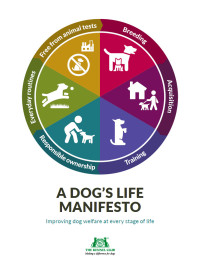 This report was published by the UK Kennel Club ahead of the 2015 general election ‘to guide the next government’ on dog related matters. In its introduction, the Kennel Club’s Chairman, Steve Dean, claims that it is the ‘UK’s largest organisation dedicated to improving the welfare, health and general wellbeing of dogs.’ The section on Breeding calls upon the next government to introduce measures to improve breeding practices to ensure that dogs’ health and welfare are prioritised. The Report recommends that the KC’s own Assured Breeders Scheme should be made mandatory. It also recommends that in order to reduce the burden on local authorities the KC should be involved in the inspection of licensed breeding premises.
The full report may be viewed here: [PDF]
The Independent Review of the Prosecution Activity of the RSPCA (Wooler Report) [September 2014]
 The Wooler Report acknowledges the lack of structure and cohesiveness in the overall arrangements for the enforcement of animal welfare legislation. It recognises the 21st century anomaly that there is no public body within central and local government that has overall responsibility for the enforcement of animal welfare law. It is largely left to the RSPCA, a private charity funded by public donations, to investigate and enforce animal welfare law. The Report recommends that the RSPCA should work more closely with government and public sector counterparts and to maintain public confidence by providing accountability and transparency.
The full report may be viewed here: [PDF]
The Sale of Dogs from Licensed Pet Shops, Canine Action UK [March 2014]
 This report highlights the worrying increase in commercial dog breeding in the last few decades, many of which are sold to third parties (dealers and pet shops) rather than directly to members of the public. This trade has significant animal welfare, consumer protection and economic implications. The Report questions whether this is an appropriate way of producing and selling pet dogs in the 20th century.
The full report may be viewed here: [PDF]
Dog Rescue Federation National Survey of Local Authority Dog Wardens [2014]
 This Report recognises that a new legal framework is needed across the UK to address the welfare issues associated with dog breeding and dog ownership. In the absence of new legislation the Federation believes that improvements are still possible if local authorities adopt a more proactive and consistent approach. The aim of the survey was to discover the extent to which local authorities vary in their approaches and practices on dog welfare-related issues, specifically in respect of the way they handle stray dogs, undertake community outreach work to promote responsible dog ownership and how they license dog breeding.
The full report may be viewed here: [PDF]
CIEH Model Licence Conditions and Guidance for Dog Breeding Establishments (England) [January 2014]
 The Chartered Institute of Environmental Health (CIEH), Dog Advisory Council, British Veterinary Association and other organisations produced this guidance for local authorities and their authorised officers and veterinary inspectors for the inspection of dog breeding establishments. In 2012, at the request of the Department for the Environment, Food and Rural Affairs (DEFRA) the working group came together to update Guidance for inspectors to include the provisions that must be taken into account under the Animal Welfare Act 2006. It is expected that all local authorities will use this Guidance so that inspection procedures will be consistent throughout the country.
The full report may be viewed here: [PDF]
The Kennel Club Dog Health Group (DHG) Annual Report [2013]
 The achievements of the DHG are outlined in this report, including the sum of £536,205 donated by the KC’s Charitable Trust for the study of canine health. It announced the establishment of the open access on line journal on canine genetics and epidemiology. It features the efforts of the French Bulldog Club to improve the health of the breed and its removal from the list of high profile breeds. It also features improvements in the Assured Breeders Scheme and changes to the Breed Watch programme (high profile breeds now known as category 3). Progress has also been made in health screening and providing an increased number of DNA tests.
The full report may be viewed here: [PDF]
Environment, Food and Rural Affairs Committee Report on Dog Control and Welfare [February 2013]
 Section 3 of this Report deals with the Breeding and Welfare of Dogs and makes some welcome recommendations. These are that anyone breeding more than two litters a year should be licensed by the local authority as a breeder; and that those involved in breeding dogs, including the Kennel Club and breed clubs must redouble their efforts to eradicate health problems. Health test results should be applied to breeding decisions. It also recommends outcrossing strategies for those breeds which have the most pressing health issues. It asks DEFRA to consider giving the Advisory Council on the Welfare Issues of Dog Breeding a regulatory role. It also recommends that DEFRA and welfare organisations give greater publicity to the Puppy Contract.
The full report may be viewed here: [PDF]
A Healthier Future for Pedigree Dogs (Update Report) 2012 APGAW [July 2012]
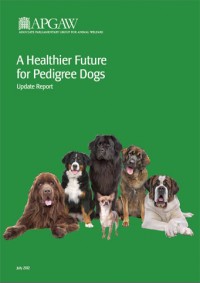 This Update Report looked at the progress made so far and produced an Action Plan for the future. This included: pressure on Defra and other bodies to supply long term funding for the Dog Advisory Council; extending the Council’s powers so that it becomes an independent regulatory body; compulsory microchipping; the licensing of breeders who breed 3 litters or more a year; the KC to adopt the Advisory Council’s Breeding Standard; improved education of the general public including Animal Welfare as part of the core curriculum of schools; the Defra Code of Practice for the Welfare of Dogs to include breeding and genetic welfare issues; endorsement of the RSPCA Puppy Contract by all stakeholders.
The full report may be viewed here: [PDF]
Independent Inquiry into Dog Breeding Report, Professor Sir Patrick Bateson FRS [January 2010]
 Funded by Dogs Trust and Kennel Club
This peer reviewed scientific report found that current dog breeding practices impose welfare costs on dogs ‘in many cases’ through poor husbandry, high levels of inbreeding, and the use of breeding pairs which will transmit inherited diseases to their offspring, or extreme characteristics which affect quality of life.
The report’s recommendations include: reward for breeders who deliver high welfare standards; establishing a non-statutory independent Advisory Council on Dog Breeding to develop breeding strategies on an individual breed basis; a computerised system for the collection of disease prevalence from vets; an Accredited Breeder Scheme with UKAS accreditation; permanent identification of dogs; new regulations under the Animal Welfare Act creating an obligation on dog breeders to have regard to the health and welfare of parent dogs and their offspring.
The full report may be viewed here: [PDF]
A healthier future for pedigree dogs APGAW [November 2009]
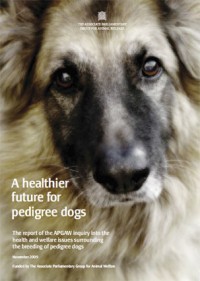 The report of the Associate Parliamentary Group for Animal Welfare inquiry into the health and welfare issues surrounding the breeding of pedigree dogs (November 2009).
This major report found ‘a serious problem with the health and welfare of many pedigree dogs’ caused by some of the current breeding practices. It suggests that action should be taken immediately to address this situation.
The report’s recommendations include: a limit on the number of times a sire can be used for breeding; health screening should be made a legal requirement for dogs selected for breeding; the title of Champion should not be given unless a dog has been health screened; the word ‘pedigree’ should be linked to a high standard of breeding for health and welfare; an independent advisory body should be set up to advise the Kennel Club and breed clubs; a puppy sale contract should be introduced to protect consumers; DEFRA should take forward a campaign for public awareness.
The full report may be viewed here: [PDF]
Pedigree dog breeding in the UK: a major welfare concern? Dr Nicola Rooney and Dr David Sargan RSPCA [February 2009]
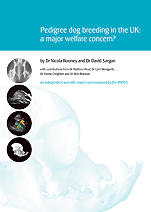
An independent scientific report commissioned by the RSPCA.
This report identified that many dogs of different breeds experience compromised welfare due to the effects of selective breeding practices. It identified two welfare issues: exaggerated anatomical features that reduce quality of life; and the increased prevalence of inherited disorders.
It endorses the findings of the CAWC Report of 2006 that the welfare issues are serious and widespread. The report suggests that measures taken so far to reduce or eradicate these problems have had only limited success, due in part because most screening programs are voluntary.
The report’s recommendations include: systematic collection of disease and mortality data; banning close matings; opening stud books; an ethical review of all breeds; increasing genetic diversity; making registration of dogs conditional on the health screening of parents; introducing codes of practice that prioritise health, welfare and temperament; educating the public that a desirable dog is one that experiences high welfare; the development of schemes for calculating estimated breeding values (EBVs) for genetic diseases.
The full report may be viewed here: [PDF]
CAWC Towards an independent advisory body on tackling genetic welfare problems in companion animals [February 2009]
This report acknowledged the increased level of interest in tackling genetic welfare problems particularly relating to dogs, referring to the All Party Group on Animal Welfare (APGAW), the Dogs Trust / Kennel Club independent review under Sir Patrick Bateson, and the recently published RSPCA report (Rooney and Sargan, 2009).
It was agreed that the advisory body should be independent and would need to be constituted so as to cover a spectrum of relevant sectors and interests. It would set its own priorities in the light of information about welfare problems.
The scope and terms of reference of an advisory body would include all companion animals; consider the best ways forward for tackling genetic welfare problems on a breed by breed (or strain) basis; advise and promote the development of breeding strategies; make recommendations about research priorities; and communicate its findings effectively.
A start will be made by engaging CAWC as the parent body for the advisory group and appointing a steering group to begin work and to look at funding.
This report has been submitted to the APGAW and Bateson inquiries whose findings will in turn inform the new advisory group.
CAWC Approaches to Tackling Genetic Welfare Problems in Companion Animals [October 2008]
This report identified the lack of a structured and co-ordinated approach for addressing genetic welfare problems. It concluded that an independent advisory body be set up to consider the best way forward to tackle problems on a breed by breed basis (this may be an appropriate role for CAWC).
The authority of such a body would rest on the composition of its members and would address, with breeders and others, the ethical and practical genetic aspects. It would address the issue of whether continued breeding in a population would be justified, and if so what the aims (and perhaps methods) of the future breeding strategies should be.
CAWC fixing ancestral problems. Genetics and welfare in companion animals focusing on syringomyelia in Cavalier King Charles Spaniels as an example [April 2008]
The aim of this workshop was to review the measures that are being undertaken to tackle genetic welfare problems, to look at the latest developments, identify bottlenecks and assess how these may be overcome. Three approaches were identified:
- Take steps to eliminate the problem through selective breeding, minimising further loss of genetic diversity (this approach is currently underway in the case of Cavaliers with SM and MVD).
- Outbreeding to another breed or breeds in a managed program.
- Not breeding from carriers of the disadvantageous trait (even if it meant, and if welfare is the priority, losing a particular breed)
The report recommended that in the case of Syringomyelia scientists and breed club representatives, facilitated by the KC, should devise a scheme for collecting MRI data for use in a program to reduce or eliminate the disease.
Companion Animal Welfare Council (CAWC) Report on Breeding and Welfare in Companion Animals [2006]
 This major report recognised the clear welfare consequences of selection for specific traits in companion
animals. It recognised that the welfare problems can be very serious because they can affect large numbers of animals
throughout the whole of their lives and can do so generation after generation.
The report also highlighted the fact that this was a welfare problem which had been largely overlooked in the past.
It recommended that the following code, based on the wording of the Council of Europe Convention, 1987, be adopted by all those who breed companion animals:
‘The selection and breeding of companion animals can result in, or perpetuate, characteristics or inherited conditions that seriously affect the quality of animals’ lives. No one should breed companion animals without careful regard to characteristics (anatomical, physiological and behavioural) that may put at risk the health and welfare of the offspring or the female parent.’
The full report may be viewed here: [PDF]